How to Structure E-commerce Website Pagination for Crawl Budget Efficiency
Effective e-commerce crawl budget management for Kenyan .co.ke domains requires a strategic reconstruction of internal linking. This strategy focuses on deep page value, efficient crawler extraction, and the prevention of internal cannibalisation. The reconstruction treats pagination as a core component of the site's navigation path.
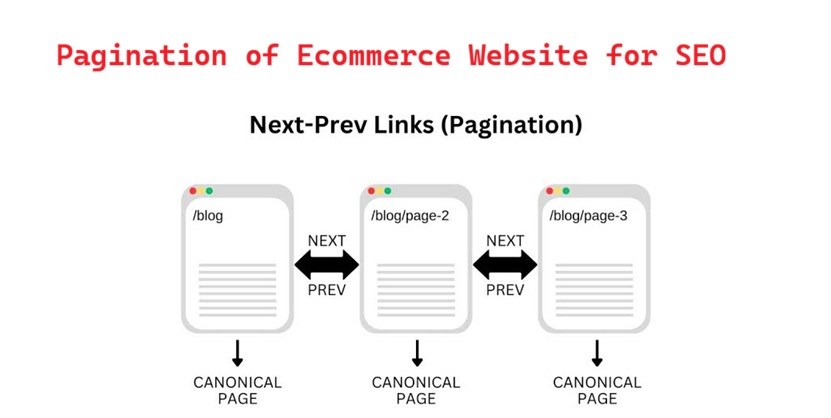
The focus for large Kenyan e-commerce inventories in 2026 shifts from managing pagination crawls to engineering the internal link graph. The link graph is engineered through pagination and category pages. This process directs crawl budget to high-value product pages, which prevents the duplication issues that cause internal cannibalisation in .co.ke search results.
How to Audit E-commerce Crawl Budget and Pagination for Kenyan Sites
An e-commerce pagination audit for Kenyan sites combines Google Search Console data with server log analysis. This combination identifies crawl waste and indexing barriers. The audit's objective is to map Googlebot's activity against the site architecture.
The mapping process pinpoints problems such as orphaned product pages, duplicate content from pagination parameters, and crawl traps in faceted navigation. This technical analysis provides the baseline for engineering a more efficient crawl path for the entire domain.
How Does Google Search Console Reveal Crawl Inefficiencies?
Google Search Console provides actionable data on crawl inefficiencies. The Index Coverage report identifies paginated URLs flagged as 'Discovered - currently not indexed' or 'Duplicate, Google chose different canonical than user'. These statuses are clear indicators of crawl budget waste.
The URL Inspection tool diagnoses why a specific deep product page is not indexed. The Crawl Stats report can reveal crawl traps by showing a high volume of requests to parameter-heavy URLs or an increase in 404 errors. These issues indicate broken internal linking within the pagination structure that requires an architectural fix.
What Does Server Log Analysis Reveal About Googlebot?
Server logs offer definitive evidence of Googlebot's activity. Raw log file analysis identifies Googlebot's precise access patterns and confirms how often it crawls deep paginated series versus high-value product pages. The analysis uncovers unnecessary crawling of low-value pages, such as filtered results that should be disallowed.
Log data also allows for a correlation between crawl frequency and server response times. Slow page load times on paginated category pages, a common issue with local Kenyan hosting infrastructure, directly reduce the number of URLs Googlebot will fetch per session.
How to Engineer the Internal Link Graph for Deep Page Value
Google confirmed in 2019 that it no longer uses `rel="next"` and `rel="prev"` as an indexing signal. Reliance on this deprecated markup is a significant architectural oversight for modern e-commerce platforms.
A contemporary, engineering-led approach treats every category and sub-category page as a hub within an internal link graph. The goal is to build a crawl path that surfaces high-value products rather than just linking pages in a linear sequence.
Deep page value is defined by business objectives. These objectives include high-margin items, products with high conversion rates, or new inventory relevant to the Kenyan market. A well-engineered graph ensures these pages are a few clicks from the homepage, receive sufficient internal link equity, and are re-crawled frequently.
What are the Best Pagination Layouts for Large Kenyan E-commerce Inventories?
The choice of pagination layout directly impacts crawler extraction limits and indexing efficiency. This is especially true in Kenya's mobile-first environment. Each pagination system presents specific trade-offs for Googlebot.
- Traditional Numbered Pagination: Numbered pagination is the most crawler-friendly method, as each page has a static, unique URL. This layout provides clear crawl paths for search engines to follow. A trade-off is that this system can push valuable products deep into the pagination series, increasing click depth for users and crawlers.
- 'Load More' Buttons: JavaScript-based 'Load More' buttons can be problematic for crawlers if not configured correctly. For search engine compatibility, each "load" must correspond to a unique, crawlable URL that updates in the address bar via the History API. Without this configuration, all products beyond the initial load are invisible to Googlebot.
- Infinite Scroll: Infinite scroll is the most challenging layout for crawler extraction. The system must be implemented with unique, crawlable URLs for each segment of content. A common failure point is an implementation that does not hydrate content into standard `<a href>` links, creating a crawl trap. A paginated fallback is necessary for search engines with this layout.
What are the Best Strategies for Faceted Navigation on .co.ke Domains?
Optimising faceted navigation on `.co.ke` domains requires a multi-layered control strategy to prevent crawl budget waste. The strategy uses canonicalization, `noindex` directives, and `robots.txt`.
First, identify and prioritise indexable facets that correspond to actual search demand, such as 'Brand + Product Type'. For filter combinations that create near-duplicate content, apply a `rel="canonical"` tag pointing to the main category page.
For facets with zero search value, such as 'sort by price', use `robots.txt` to block the specific URL parameter from being crawled. The `noindex` tag is the correct tool for URLs that must be accessible but not indexed.
Dynamic filtering can use JavaScript to update product listings without generating new, crawlable URLs. This method contains Googlebot within a defined set of indexable pages while providing a better user experience.
How Does Reconstructing Internal Linking Prioritise Deep Product Pages?
A strategic internal linking architecture funnels authority and crawl budget to the most important product pages. This architecture moves beyond standard navigation menus.
Category and sub-category pages must act as primary distribution hubs. These pages should feature curated sections like 'Top Sellers in Mombasa' or 'New Arrivals' with direct links to high-priority product pages.
This linking model shortens the click depth from the homepage to important products. A shorter click depth signals higher importance to Googlebot.
Product pages themselves must also contribute to the link graph. Dynamic modules like 'Customers also bought' create a semantic web of relevant links between items. These links must be standard HTML `<a href>` tags, rendered on the server, to guarantee crawlers can follow them. The anchor text must be descriptive and keyword-rich.
How Does JavaScript Rendering Impact Pagination Crawling on .co.ke Sites?
Client-side JavaScript rendering on Kenyan e-commerce sites can challenge deep page indexing. The process forces Googlebot to expend a limited rendering budget to discover pagination and product links.
If pagination links are only visible after client-side JavaScript execution, Googlebot may fail to see them during its initial HTML crawl. Googlebot must then schedule the page for rendering, which consumes time and resources from the site's crawl budget.
For `.co.ke` sites with thousands of products, this rendering delay can result in severe under-indexing of deep inventory. To mitigate this risk, all critical navigation and product links must be present in the initial server-rendered HTML. Techniques like dynamic rendering or server-side rendering (SSR) are effective solutions.
Google's Rich Results Test and the URL Inspection tool can verify that Googlebot sees paginated and filtered content correctly. This verification is a required step for any architectural change.
What Unique Kenyan Challenges Affect E-commerce Crawl Budget?
Operating a `.co.ke` domain requires addressing local technical and infrastructure realities. The dominance of mobile-first indexing in Kenya means mobile site performance is the primary determinant of crawl efficiency.
Poorly implemented 'load more' features that fail on slow mobile connections can make entire product categories invisible to Googlebot. This specific failure is a common issue affecting sites targeting the Kenyan market.
Local server infrastructure and CDN choices also play a direct role. High latency from servers located outside the region can slow down Googlebot's crawl rate, effectively reducing crawl budget. Page load speed, often impacted by heavy integrations for local payment gateways, must be managed. These third-party scripts can delay page rendering and prevent Google from seeing the full product catalogue.
How to Measure and Monitor Crawl Budget for Large E-commerce Catalogues
Continuous measurement is required for managing the crawl budget of a large-scale e-commerce platform. A monitoring framework translates technical crawl metrics into actionable business intelligence. The framework validates the impact of architectural changes and proactively identifies new issues.
What are the Key Metrics for Crawl Budget Efficiency?
To assess crawl budget efficiency, technical teams must track KPIs that directly impact deep page visibility. Key metrics include 'Pages crawled per day', 'Average response time' from GSC's Crawl Stats, and 'Crawl errors'.
Higher latency, reflected in the average response time, reduces the number of pages crawled per session. Crawl errors waste budget on dead-ends.
A primary indicator of inefficiency is the volume of pages in the 'Discovered - currently not indexed' and 'Crawled - currently not indexed' reports. A high count of valuable product URLs in these statuses suggests the site's architecture fails to signal their importance or that Google has exhausted its budget before reaching them.
What Tools are Used for Crawl Budget Monitoring?
A suite of tools is necessary for a complete view of crawl budget performance. Google Search Console provides the foundation for top-level diagnostics.
Server log analysis provides granular, real-time data on bot activity. SEOs use tools like Screaming Frog SEO Log File Analyser for this task. Large-scale Kenyan e-commerce sites with extensive catalogues require enterprise-level platforms like Botify or DeepCrawl.
These enterprise platforms combine crawl data with log file analysis and analytics. The combined data delivers precise recommendations on fixing crawl traps, orphan pages, and internal link equity distribution.
How to Implement a Crawl Budget Optimisation Strategy for .co.ke Domains
Deploying a navigation reconstruction project requires a structured, phased approach to minimise business risk. The process begins with an audit phase to create a comprehensive baseline of crawl inefficiencies.
Audit data informs a prioritisation framework. The framework focuses first on high-impact issues like faceted navigation crawl traps or unrenderable JavaScript content.
Implementation requires tight collaboration between SEO, development, and content teams to ensure technical changes align with business goals. All modifications must be tested in a staging environment using crawler simulators and Google's tools.
After deployment, development teams must immediately monitor server logs and GSC data. The monitoring confirms that Googlebot is responding positively to the new architecture and detects any unforeseen negative impacts.
| Strategy Component | Primary Tool or Method | Business Objective |
|---|---|---|
| Crawl Path Audit | Server Log Analysis and GSC | Identify and quantify budget waste |
| Pagination Layout | Numbered Pagination | Ensure 100% product discoverability |
| Faceted Navigation | robots.txt and rel="canonical" |
Prevent index bloat from filters |
| Internal Linking | Curated Category Hubs | Shorten click depth to high-value pages |
| JavaScript Rendering | Server-Side Rendering (SSR) | Guarantee bot access to all links |
What is the Commercial Impact of Aligning Pagination with Crawler Limits?
The objective of engineering site architecture for crawler efficiency is commercial. Strategic e-commerce crawl budget management directly translates to increased revenue for Kenyan e-commerce businesses.
Eliminating crawl waste and guiding Googlebot to high-value product pages increases the number of indexable products in a catalogue. Each newly indexed deep page is another potential entry point for customers searching with long-tail, high-intent queries.
Improved deep page visibility leads to a direct uplift in qualified organic traffic. As more inventory becomes discoverable through search, the business captures demand that was previously inaccessible. This diversified traffic stream is more resilient to algorithm updates that affect broad head terms.
In the competitive Kenyan e-commerce market of 2026, the investment in a crawl-efficient site architecture is a direct investment in sustainable revenue growth.